The Cherokee Nation's Own Civil War
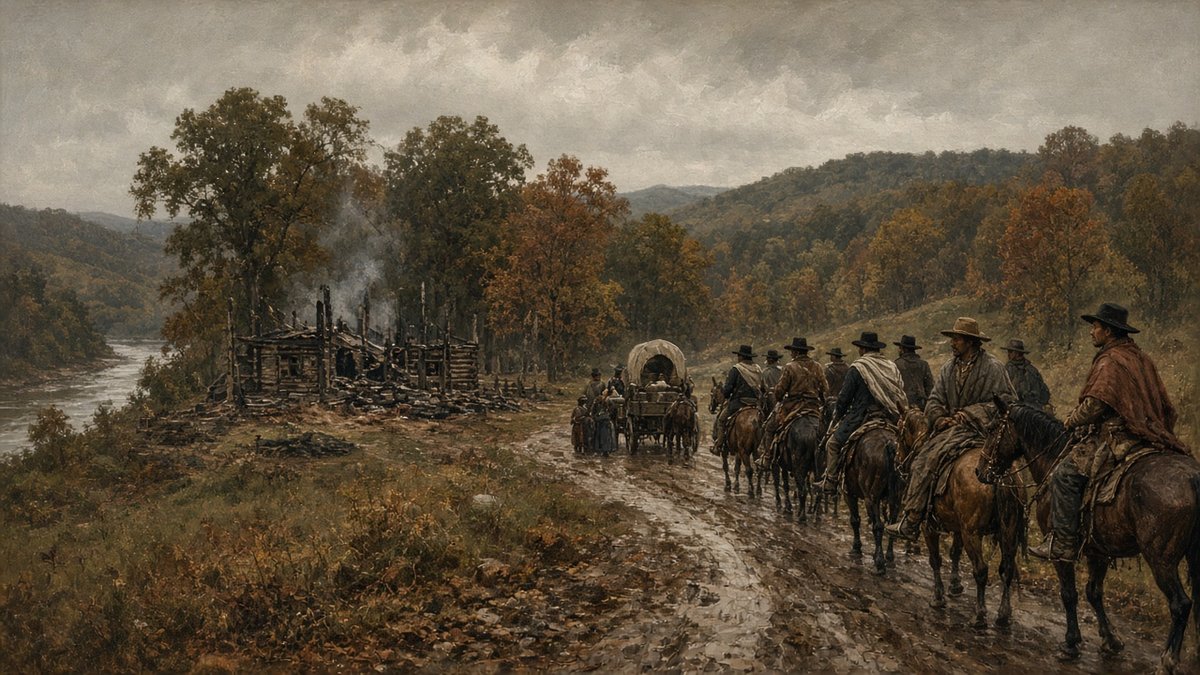
The Cherokee Nation was already divided when the Civil War started. The removal treaty of 1835 had broken it into factions, and nobody had forgotten the killings that followed removal in 1839. Principal Chief John Ross led the majority, and in 1861 he tried to keep the nation neutral. Stand Watie, from the treaty faction, raised a Confederate regiment. By October 1861 Union troops had left Indian Territory and Confederate forces surrounded it, and Ross signed a treaty with the Confederacy.
A nation at war with itself After the Union won at Pea Ridge in March 1862, many of Ross's Cherokee soldiers switched sides and joined the Union Indian Home Guard. Ross left for Philadelphia and Washington. Back in Indian Territory, neighbors fought neighbors. Farms were burned and livestock driven off, and thousands of Cherokee refugees from both sides ended up in camps in Kansas or along the Red River.
Watie was made a Confederate brigadier general and kept leading raids into the last year of the war. He surrendered his command at Doaksville on June 23, 1865, almost a month after the Trans-Mississippi Department had given up, and he is usually counted as the last Confederate general in the field to surrender. The treaty of 1866 that came afterward cost the Cherokee Nation land and made it accept railroads across its territory.
West of the War tells the Cherokee war as one of the main threads of the western conflict.
Sources: Oklahoma Historical Society, Encyclopedia of Oklahoma History and Culture, "Civil War" and "Watie, Stand"; Clarissa W. Confer, The Cherokee Nation in the Civil War (2007); Cherokee Nation, history pages (cherokee.org); Northeastern State University, "1865 Stand Watie Cease-Fire Treaty"; Smithsonian National Museum of American History, "The Civil War's final surrender".
Illustration: AI-generated, artistic interpretation.